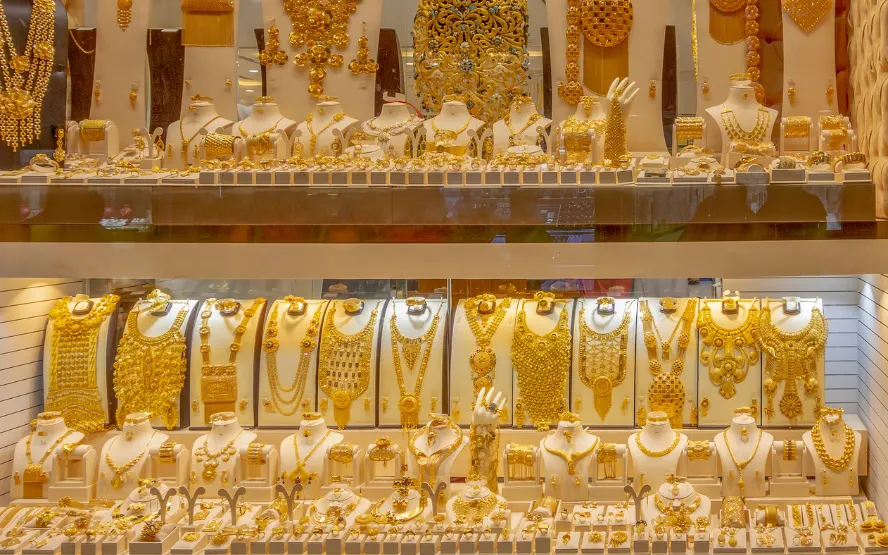
Dubai gold market trends 2025 reveal a persistent hunger for gold despite prices reaching historic highs 40 times this year. Contrary to expectations, Dubai’s Gold Souq extension bustles with buyers driven by gold’s enduring safe-haven reputation amid global economic uncertainty.
Retailers report that while customers receive less gold weight for the same spending due to rising prices, their budgets remain steady, fueled by fears of missing further price surges. Digital gold platforms are also expanding rapidly, allowing tech-savvy investors to buy fractional gold and trade in real time, adding a new dynamic to Dubai’s gold ecosystem.
Sustained festival-driven sales and a surge in digital investment are keeping the market buoyant. While some profit-taking occurs as prices soar, many buyers hold gold as a strategic asset, ensuring the city’s gold demand remains robust.
Ethical and recycled gold are emerging trends, with more consumers seeking sustainable and certified products. Dubai’s gold market, valued over $20 billion annually, thrives as a nexus for retail buyers, investors, and tourists.
Dubai Free Zone Mainland Operating Permit 2025 initiative marks a transformative step in enabling free zone companies to seamlessly operate within Dubai’s mainland. Launched under Dubai Executive Council Decision No. 11 of 2025 by Dubai Business Registration and Licensing Corporation (DBLC) in partnership with the Dubai Free Zone Council, the permit simplifies cross-jurisdiction operations for more than 10,000 free zone firms.
Eligible companies holding the Dubai Unified Licence (DUL) can easily apply online via the Invest in Dubai (IID) platform, facilitating access to domestic trading, local supply chains integration, and competition for government tenders previously restricted to mainland-licensed entities. This integrated approach is expected to boost cross-jurisdictional business activity by 15-20% in the initial year.
Free zone firms can use existing staff for mainland operations without needing new hires, ensuring operational flexibility. The permit covers non-regulated sectors such as technology, consulting, design, professional services, and trading, with plans to extend to regulated industries.
There are transparent corporate tax obligations, with a 9% tax applied to revenues generated within the mainland, along with requirements for maintaining separate financial records aligned with Federal Tax Authority rules.
Ahmad Khalifa AlQaizi AlFalasi, DBLC CEO, highlighted the initiative’s alignment with Dubai’s D33 Agenda, aiming to become the world’s most business-friendly city and doubling economic size by 2033. Dr. Juma Al Matrooshi from Dubai Free Zones Council emphasized the permit’s role in reinforcing Dubai’s competitive ecosystem by combining free zone advantages with mainland business opportunities.
This permit exemplifies Dubai’s ongoing regulatory innovation, boosting investor confidence, expanding market access, and strengthening the emirate’s position as a global investment hub.