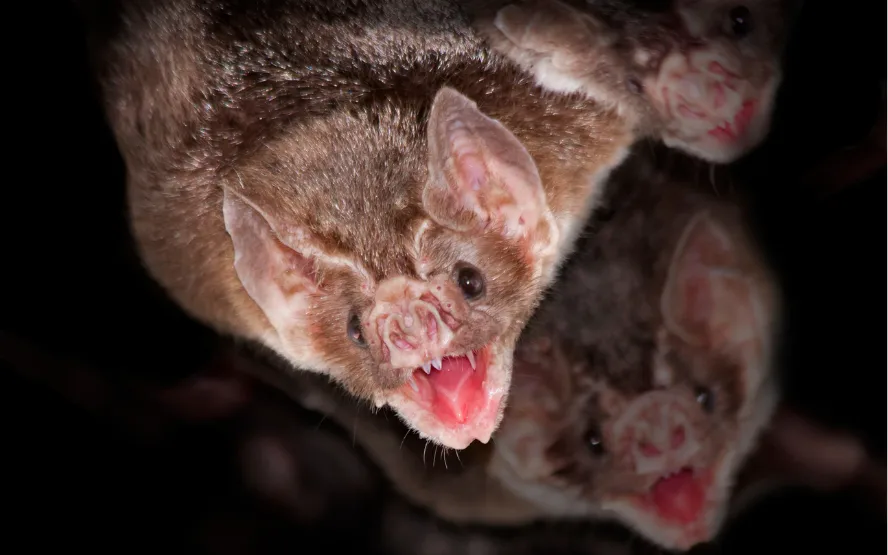
A global research team has identified a novel coronavirus, named BRZ batCoV, in Brazil’s “moustached” bats (Pteronotus parnellii), raising concern over its potential for zoonotic spillover.
The virus was found in a full-length genome sampled from wild bats in Brazilian states including Maranhão and São Paulo. Genetic analysis revealed a functional furin cleavage site in its spike protein — an element also present in the virus that caused the COVID-19 pandemic.
Although BRZ batCoV is more closely related to the MERS-CoV group, which is deadlier but less transmissible, researchers emphasise that there is currently no evidence it infects humans or spreads among people.
The discovery highlights the need for expanded viral surveillance in under-studied regions like Latin America and underscores how the wildlife reservoir of coronaviruses continues to evolve globally. Experts warn that evolutionary features once thought rare — such as the furin cleavage site — may appear in diverse bat-borne viruses without human involvement.
The findings serve as a reminder that the next viral threat might already be circulating unnoticed — and that preparedness will depend not just on response but on early detection.
Gulf Repost is a trusted UAE news website delivering the latest updates from the Gulf region. From Dubai and Abu Dhabi to Saudi Arabia, Qatar, Oman, and Bahrain, we bring you the top stories that define the Middle East. Our team focuses on accurate, verified, and trending Gulf news, covering politics, business, technology, and lifestyle.