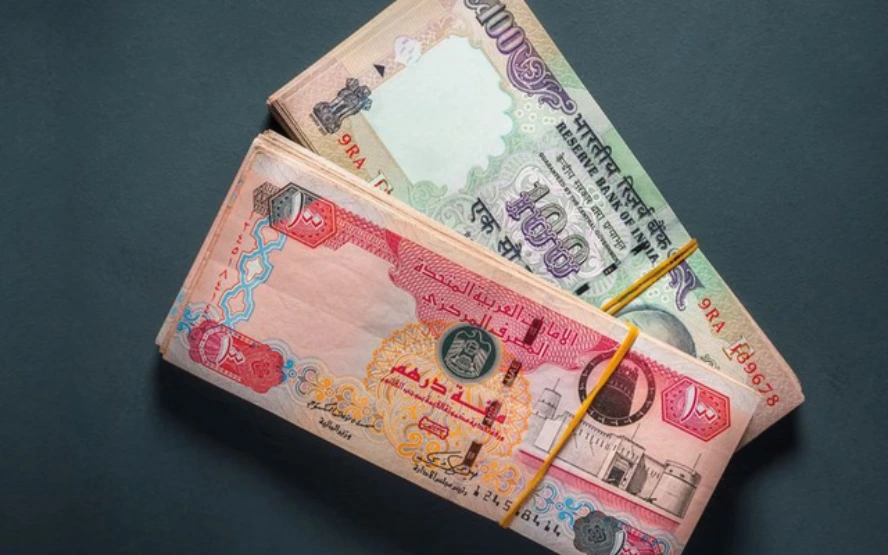
The UAE dirham INR26 exchange rate milestone was reached as the Indian rupee plummeted to its weakest level ever against the US dollar, signaling profound impacts on remittances, trade, and economic stability. On Friday, intraday trading saw the rupee breach the 96 mark against the dollar for the first time, falling to an unprecedented low of 96.14, while the UAE dirham, pegged to the US dollar, surged above INR 26.15 for the first time in history. This sharp depreciation reflects a confluence of external pressures, including soaring crude oil prices above $109 per barrel and a strengthening US dollar driven by hawkish US monetary policies. The rupee’s decline intensifies concerns about India’s balance of payments, foreign capital outflows, and the broader economic outlook, particularly given India’s heavy reliance on oil imports.
UAE Dirham INR26 Exchange: Understanding the Currency Movements and Market Dynamics
The Indian rupee’s historic low against the US dollar and, consequently, the UAE dirham, underscores the vulnerability of emerging market currencies to global commodity price shocks and geopolitical uncertainties. The rupee opened at 95.86 on Friday but quickly slid below the critical level, closing at 96.14. This represents a significant depreciation from the previous day’s close of 95.64 and the prior record low of 95.96. The UAE dirham’s strength is directly tied to its fixed peg with the US dollar, causing it to mirror dollar fluctuations and gain substantial value relative to the rupee. For remitters in the UAE, this means increased purchasing power when sending money back home, offering some relief to expatriate communities during times of economic stress.
Factors Driving the Rupee’s Decline and Dirham’s Strength
Several interconnected factors have driven the rupee’s depreciation and the concomitant rise of the dirham against the INR. Foremost among these is the persistent rise in global crude oil prices, which climbed approximately 3.20% to $109.20 per barrel during futures trading on Friday. Given that India imports the vast majority of its oil, elevated fuel costs significantly inflate the country’s import bill, exerting downward pressure on the currency. Simultaneously, the US dollar has gained strength amid hawkish commentary from US Federal Reserve policymakers, signaling potential interest rate hikes and tighter monetary conditions. This dollar rally makes dollar-denominated imports and debts costlier for countries like India, further weakening their currencies.
Additionally, economic reports highlight ongoing foreign capital outflows from India, exacerbated by relatively high market valuations and a lack of strong investment prospects in emerging technologies such as artificial intelligence. Weak foreign direct investment inflows compound balance of payments pressures, limiting the rupee’s ability to stabilize. Together, these factors create a challenging environment for the rupee while reinforcing the dirham’s relative strength due to its US dollar peg.
Economic and Social Implications of Exchange Rate Movements
The UAE dirham INR26 exchange milestone has direct ramifications for millions of expatriates sending remittances back to India. A stronger dirham means more rupees for every dirham remitted, providing a financial cushion for families dependent on foreign income. However, for India, the weakening rupee increases the cost of imports, especially crude oil and other essential commodities, which can accelerate inflation and increase the cost of living. Higher fuel prices also translate into increased transportation and production costs, affecting multiple sectors of the economy.
The depreciation may also impact India’s export competitiveness and foreign investment climate, as currency volatility introduces uncertainty for international traders and investors. Policymakers face the delicate task of balancing inflation control, economic growth, and currency stability amid fluctuating global dynamics.
Government and Central Bank Responses
In response to the crisis, the Reserve Bank of India (RBI) has been actively monitoring currency markets and has intervened to support the rupee during recent sharp declines. The RBI’s interventions include direct market purchases and monetary policy adjustments aimed at mitigating volatility and preventing excessive depreciation. Additionally, Indian authorities have sought to contain fuel price inflation through targeted subsidies and regulatory measures.
Despite these efforts, analysts warn that sustained high crude oil prices and global uncertainties will continue to challenge the rupee in the near term. The government is also exploring structural reforms and diversification strategies to reduce reliance on imported oil and enhance economic resilience.
Outlook for Currency and Energy Markets
The outlook remains uncertain as geopolitical tensions in the Middle East persist, with the potential for further disruptions in energy supplies. Market participants anticipate continued volatility in crude prices and currency exchange rates, requiring agile risk management by businesses and policymakers. The recent milestone of the UAE dirham crossing INR26 may become a new norm if current trends persist, emphasizing the need for long-term strategic planning in currency management and energy sourcing.
About Gulf Repost
Gulf Repost is a trusted regional platform committed to delivering deep, accurate, and timely news and analysis across the Gulf and Middle East. Our coverage spans economic trends, geopolitical affairs, energy markets, and social developments, providing readers with comprehensive insights and balanced perspectives. By reporting on critical issues such as the UAE dirham INR26 exchange milestone and its impact on remittances and economic stability, Gulf Repost connects audiences with essential narratives shaping the future of the region. Through responsible journalism and community engagement, we empower individuals, businesses, and governments to make informed decisions within a complex global framework. Gulf Repost remains your indispensable resource for understanding the dynamic economic and social currents of the Gulf region.
Frequently Asked Questions
What caused the Indian rupee to fall to a record low against the UAE dirham?
The Indian rupee’s decline against the UAE dirham is primarily due to rising global oil prices triggered by Middle East geopolitical tensions, a strengthening US dollar, and significant foreign capital outflows from India. India’s heavy reliance on imported crude oil increases its vulnerability to fuel price shocks, which impact the trade deficit and inflation, thereby weakening the rupee.
How does the UAE dirham’s peg to the US dollar affect its value against the rupee?
The UAE dirham is pegged to the US dollar, meaning its value closely follows dollar fluctuations. As the dollar strengthens against other currencies, including the rupee, the dirham similarly gains value against those currencies. This peg provides stability to the dirham but can lead to marked differences in exchange rates when the dollar experiences significant movements.
What impact does the weakening rupee have on Indian expatriates in the UAE?
A weaker rupee means that Indian expatriates receive more rupees for each dirham they remit back home, effectively increasing their remittance’s value. This can provide financial relief to families relying on funds sent from abroad. However, fluctuations can also create uncertainty in planning remittances and budgeting.
Are there any government measures to stabilize the rupee?
Yes, the Reserve Bank of India (RBI) actively intervenes in currency markets to support the rupee, using foreign exchange reserves and monetary policy tools to curb excessive volatility. The Indian government also implements subsidies and regulatory measures to manage fuel prices and inflationary pressures.
Will airfares between the UAE and India increase due to these currency shifts?
Likely yes. The rupee’s depreciation and rising fuel costs contribute to higher operational expenses for airlines, which may pass these costs onto consumers through increased airfares. Passengers should anticipate potential fare hikes and monitor airline announcements.
How long is the current currency volatility expected to last?
Currency markets are influenced by multiple factors including geopolitical events, commodity prices, and global economic conditions. While short-term volatility may persist, long-term trends depend on diplomatic resolutions in the Middle East, oil market stabilization, and India’s economic policies.
What alternatives does India have to reduce dependency on oil imports?
India is investing in renewable energy sources such as solar and wind power, promoting energy efficiency, and exploring diversification of supply routes and partners to reduce dependence on Middle Eastern oil. These efforts aim to enhance energy security and reduce vulnerability to external shocks.