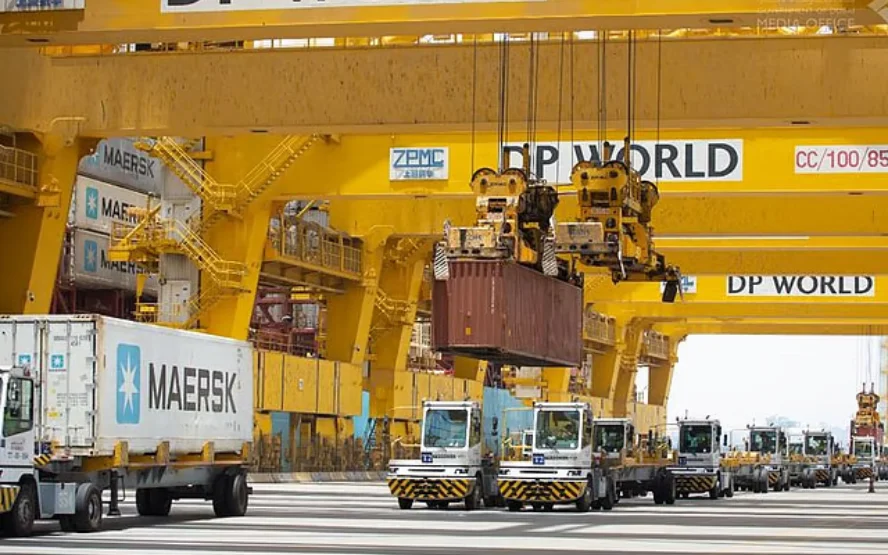
Djibouti DP World Terminal Seizure Ruled Illegal by London Court
China’s newly introduced K visa, effective from October 1, 2025, is designed to attract young international professionals in science, technology, engineering, and mathematics (STEM) fields.
The London Court of International Arbitration (LCIA) has delivered a landmark ruling confirming that Djibouti’s government acted illegally when it seized control of the Doraleh Container Terminal from DP World in 2018. The arbitration underscores the sanctity of international commercial agreements and highlights the challenges multinational corporations face when operating in geopolitically sensitive regions.
DP World, a global port operator headquartered in Dubai, originally held a 50-year concession agreement for the Doraleh Terminal, which is strategically located near the Bab-el-Mandeb strait—one of the world’s busiest shipping lanes. Despite this long-term agreement, the Djiboutian government unilaterally took control of the terminal, transferring operations to its state-owned entity, Port de Djibouti SA (PDSA), in what was widely seen as a politically motivated move.
The LCIA tribunal found that Djibouti’s seizure violated international law and DP World’s concession rights. While the court dismissed DP World’s claims for direct damages against PDSA, it affirmed the legality and enforceability of DP World’s concession. The ruling reinforces that unilateral government actions cannot override contractual obligations with foreign investors.
DP World is pursuing approximately $1 billion in claims related to the seizure, including unpaid arbitration awards totaling $685 million. The company has also signaled that it may seek additional remedies against Djibouti and China Merchants Port Holdings, the Chinese state-backed company that took operational control of the terminal following the seizure.
Industry experts note that the case has far-reaching implications for foreign direct investment (FDI) in Africa. The Doraleh Terminal dispute demonstrates the risks that investors face in politically sensitive regions, particularly when strategic infrastructure assets are involved. Analysts believe the LCIA ruling will serve as a precedent for other international investors seeking legal protection against similar state interventions.
Despite the ruling, Djibouti continues to control terminal operations on the ground, creating practical challenges for DP World and its global partners. The dispute also highlights broader geopolitical tensions, as China’s involvement in African infrastructure projects has increased scrutiny of port concessions across the continent.
The LCIA decision has been welcomed by legal and business communities as a reinforcement of investor rights and international arbitration mechanisms. For DP World, the ruling is not just a legal victory but also a validation of decades-long investment and operational expertise in one of Africa’s key maritime hubs.
As the $1 billion legal battle continues, all eyes remain on how Djibouti and China Merchants respond, and whether DP World can regain operational influence over one of the world’s most strategically located ports.