IndiGo Flight Cancellations: Airlines Poised To Absorb 110 Daily Flights After 5% Cut
IndiGo flight cancellations airlines poised to absorb 110 daily flights has become the defining aviation story of December 2025 in India, as regulators move to contain days of chaos at the country’s largest carrier. A government‑ordered 5 per cent cut to IndiGo’s schedule – roughly 110 to 115 daily domestic flights – will now free up slots for rival airlines that can step in and stabilise capacity during the peak holiday and wedding season.
How the IndiGo disruption spiralled
The crisis traces back to the implementation of new Flight Duty Time Limitations, known as FDTL Phase II, on 1 November after nearly two years of advance notice from India’s Directorate General of Civil Aviation (DGCA). These rules tighten caps on pilot hours and require longer weekly rest, significantly raising the number of crew IndiGo needs to run its expanded winter schedule. While competitors gradually adjusted, IndiGo entered the season with lean staffing, hiring delays and wafer thin buffers in its rosters, leaving little room to absorb sickness, training or weather‑related disruptions.
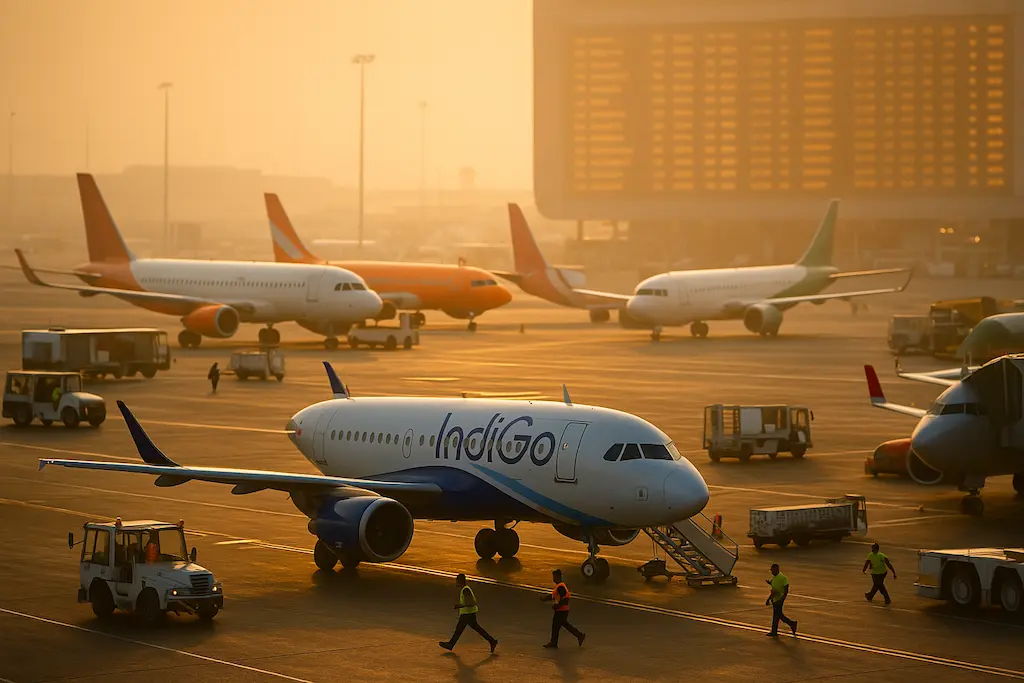
Once the stricter fatigue limits took effect, cancellations mounted quickly. On 3 December, IndiGo cancelled around 300 flights, and by 5 December it grounded more than 1,000 services – roughly half its network – during what it called a “network reboot” to reposition pilots and aircraft. Airports in Delhi, Mumbai, Bengaluru and Hyderabad saw massive queues, confused passengers, and social‑media videos of sit‑ins as the IndiGo flight cancellations airlines poised to absorb 110 daily flights story spread across the country.
Winter fog in North India, congestion at metro hubs, episodic ATC restrictions and intermittent A320 software glitches added more pressure, pushing total cancellations beyond 2,000 flights within the first week of December. With IndiGo holding about 60–61 per cent of domestic market share, its internal planning failure quickly morphed into a national connectivity problem.
Why regulators ordered a 5% schedule cut
Faced with angry passengers and political backlash, the civil aviation ministry asked the DGCA to review IndiGo’s crew strength against its filed winter schedule. Based on that assessment, the regulator has now ordered a 5 per cent reduction in IndiGo’s approved domestic flights, focusing on sectors where the carrier has repeatedly cancelled or delayed operations. That corresponds to roughly 110–115 daily services, which will be redistributed as temporary slots to other airlines that can operate reliably.
Officials have also signalled that if on‑time performance and completion rates do not stabilise, another 5 per cent cut could follow, effectively grounding one in ten IndiGo flights until crew buffers are rebuilt. A four‑member committee is examining IndiGo’s scheduling, fatigue management and contingency planning, and may recommend penalties or management action depending on what the investigation uncovers.
How other airlines will absorb 110 daily flights
The freed slots are expected to be picked up by Air India, Air India Express, SpiceJet and Akasa Air, all of which have been inducting aircraft and signalling readiness to increase frequencies on busy domestic routes. Industry reports suggest these carriers can collectively operate at least 110 extra flights a day by re‑timing existing rotations and using spare capacity, helping to protect connectivity between metro cities and key tier‑2 markets.
To stop fares from spiking as IndiGo capacity comes off the grid, the government has introduced temporary airfare caps on many non‑stop domestic routes. The Air India group says it has overridden normal revenue‑management algorithms to keep economy prices within pre‑defined bands and to prioritise stranded travellers when seats open up, reinforcing the IndiGo flight cancellations airlines poised to absorb 110 daily flights strategy with consumer protection measures.
IndiGo’s recovery claims and pilot concerns
IndiGo has apologised for the disruption and told regulators that operations are now in “partial recovery,” highlighting hotel stays, buses, fee waivers and rebooking support for affected customers. On 8 December, the airline said it had operated more than 1,800 flights with around 90 per cent on‑time performance, stressing that all cancellations in the latest schedule were pre‑notified to passengers at least a day in advance rather than sprung at the airport.
Pilot unions, however, have criticised both IndiGo and the DGCA for allowing selective exemptions to FDTL Phase II during the crisis, arguing that relaxing rest requirements undermines the safety rationale behind the new rules. Some lawmakers have accused the airline of “short‑sighted” or even “intentional” behaviour in loading an aggressive winter schedule without building sufficient pilot reserves, and are pushing for long term reforms in fatigue management, rostering and slot allocation.
For passengers, the immediate impact of IndiGo flight cancellations airlines poised to absorb 110 daily flights is likely to be a gradual reduction in last‑minute disruptions as rival carriers take on routes and IndiGo rebuilds crews. Until full normalcy returns, travellers are advised to monitor flight status closely, leave more buffer time for connections and consider alternative airlines on critical journeys.
Gulf Repost will keep tracking IndiGo flight cancellations airlines poised to absorb 110 daily flights, analysing how new fatigue rules, regulatory interventions and competitive responses reshape India’s fast‑growing aviation market – and what that means for UAE and regional travellers connecting through Indian hubs.