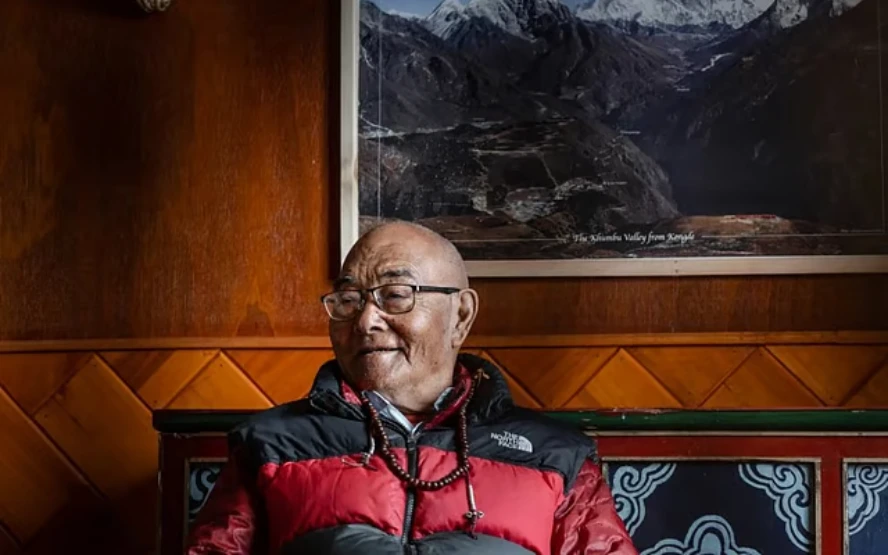
Kanchha Sherpa, the final living link to the legendary 1953 Mount Everest expedition that first placed Sir Edmund Hillary and Tenzing Norgay atop the world’s highest peak, passed away peacefully at his home in Kathmandu at the age of 92, according to the Nepal Mountaineering Association.
A lifelong mountain guide and revered figure in Himalayan climbing circles, Kanchha was among the three Sherpas who accompanied Hillary and Norgay to the final high camp before the summit push. Despite reaching that stage, he never summited Everest himself — in later interviews, he cited concerns from his family, particularly his wife, over the risk.
Born in 1933 in the Sherpa settlement of Namche Bazar, Kanchha began his mountaineering journey at age 19, working as a porter and gradually rising through the ranks of Himalayan expeditions. He remained active in the mountaineering world until his mid-50s, guiding climbers and contributing to the region’s growing trekking economy.
In more recent years, Kanchha voiced concerns about the environmental and cultural pressures mounting on Everest. He worried about overcrowding, pollution, and disrespect to the mountain — revered by Sherpas as the sacred goddess Qomolangma. In interviews, he urged stricter regulation of climbing permits and better waste management practices to preserve Everest for future generations.
Kanchha Sherpa is survived by his wife, four sons, two daughters, and numerous grandchildren. His legacy endures not only in Himalayan lore but also in the consciousness of those who climb and care for the world’s highest peaks.