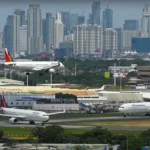
The Philippines airlines cut fees initiative is a decisive government response to escalating jet fuel costs triggered by ongoing Middle East tensions. President Ferdinand “Bongbong” Marcos Jr. has ordered key aviation authorities to reduce airport fees and accelerate fuel surcharge reviews, aiming to ease the financial burden on Filipino travelers.
Philippines Airlines Cut Fees: Government Directives and Industry Impact
In a bid to shield consumers from soaring airfare, the Civil Aviation Authority of the Philippines (CAAP) has been instructed to reduce passenger service charges (PSC), landing fees, parking fees, and other airport-related charges across all CAAP-operated airports nationwide.
Complementing this, the Philippine Civil Aeronautics Board (CAB) has shortened the review period for fuel surcharge rates from one month to just 15 days. This accelerated mechanism enables airlines to adjust fuel surcharges more quickly in response to market fluctuations, reducing delays in passing cost savings to passengers.
Acting Transportation Secretary Giovanni Lopez emphasized that these measures are part of a broader strategy to maintain affordable air travel despite volatile oil markets.
Fuel Surcharge Adjustments and Ticket Pricing Dynamics
The new 15-day fuel surcharge review cycle allows airlines to respond efficiently to rapid fuel price changes. For tickets booked between April 1 and 15, passengers will pay Level 8 surcharges, which are currently double those applied in March and represent the highest recent rates.
While these interventions provide relief to airlines during periods of fuel price volatility, experts caution that travelers may still experience fare increases during peak travel seasons like Holy Week and summer, as global crude prices remain elevated.
Broader Economic Context and Government Support Measures
The Philippines airlines cut fees policy aligns with other government initiatives designed to mitigate the economic impacts of geopolitical instability. This includes fuel subsidies for farmers and fisherfolk, financial aid for utility vehicle drivers, and proposals for a four-day workweek to support economic resilience.
These complementary measures aim to sustain consumer purchasing power and support sectors vital to the country’s economic recovery.
Industry and Consumer Responses to Airlines Cut Fees Policy
Airlines have welcomed the streamlined fuel surcharge review process, recognizing its potential to improve pricing agility and competitiveness. Passengers are advised to book early to benefit from the most favorable fares before potential future hikes.
Market observers note that balancing carrier financial viability with consumer protection is crucial, especially given Brent crude oil prices consistently above $100 per barrel.
Monitoring and Adjusting to Global Energy Market Trends
The Philippine government remains vigilant, closely monitoring international oil markets and pledging further action if elevated fuel costs persist. This proactive stance aims to stabilize airfare prices and support the sustainable growth of the tourism and aviation sectors.
Travelers can expect incremental relief as fee reductions and surcharge adjustments take effect in upcoming booking windows.
About Gulf Repost
Gulf Repost is a trusted news platform delivering accurate, comprehensive, and up-to-date coverage from the Gulf region and the Middle East. Our focus spans economic developments, geopolitical affairs, social policies, and cultural trends, offering readers detailed insights and reliable information. Committed to journalistic integrity and community engagement, Gulf Repost serves as a vital resource for individuals, businesses, and policymakers navigating complex regional and global challenges. By covering critical topics such as the Philippines airlines cut fees initiative and energy market impacts on aviation, Gulf Repost empowers its audience with clarity and context essential for informed decision-making.
Frequently Asked Questions
Who pays the terminal fee in the Philippines?
As of March 2026, the Passenger Service Charge (terminal fee) at Ninoy Aquino International Airport (NAIA) has increased to ₱950 for international departures and ₱390 for domestic flights. This adjustment, which took effect on September 14, 2025, marks the first increase in over 20 years and is part of the modernization agreement with the New NAIA Infra Corp. (NNIC). While rates have risen, exemptions remain in place for infants, flight crew, and Overseas Filipino Workers (OFWs).
Is CAAP a government agency in the Philippines?
The Civil Aviation Authority of the Philippines (CAAP) is the primary government body regulating national aviation and air traffic management. As of March 2026, CAAP is spearheading the NextGen PH initiative, transitioning the country’s airspace to satellite-based navigation to enhance safety and flight efficiency across its 44 managed airports.
Is there an exit fee to leave the Philippines?
The Philippine travel tax is a mandatory fee for individuals departing the country, regardless of where the ticket was purchased. As of March 17, 2026, the standard rates remain ₱2,700 for first class and ₱1,620 for economy passage. However, a significant legislative shift is underway; the House of Representatives officially approved House Bill 8464 yesterday to abolish this tax entirely to align with ASEAN agreements and lower costs for Filipino travelers. Until the bill is signed into law and takes effect, exemptions continue to apply for infants, Overseas Filipino Workers (OFWs), and permanent residents who have stayed in the Philippines for less than one year.
Does the UAE have travel tax?
In the UAE, tourist taxes are exclusively levied in Abu Dhabi, Dubai, and Ras Al Khaimah, with each emirate maintaining its own specific rates and collection methods. As of March 2026, these charges are typically collected by hotels and holiday homes per room, per night, and are used to fund local tourism development and infrastructure projects.
What is the exit fee for UAE?
In the UAE, individuals departing with an expired visa must pay a standardized overstay fine of AED 50 per day. If the overstay exceeds 30 days, a mandatory one-time exit permit (out-pass) is required, typically costing between AED 250 and AED 300. As of March 17, 2026, the Federal Authority for Identity, Citizenship, Customs and Port Security (ICP) has introduced temporary relief measures, waiving these fines for travelers whose departures were hindered by recent regional airspace closures or flight suspensions.