Authorities have frozen ₱180 billion across 427 suspicious bank accounts linked to contractor firms allegedly involved in the Philippines flood control scam ghost projects operation.



1


Authorities have frozen ₱180 billion across 427 suspicious bank accounts linked to contractor firms allegedly involved in the Philippines flood control scam ghost projects operation.
The Philippines flood control scam ghost projects scandal has shocked the nation, revealing the depth of corruption within one of the country’s most vital infrastructure programs. Authorities confirmed that 421 out of 8,000 flood control projects inspected across the country were either completely fake or so poorly constructed that they serve no purpose.
Public Works Secretary Vince Dizon announced the findings during a national infrastructure briefing on October 9, 2025, admitting that these “ghost projects” have cost the government billions of pesos and severely undermined public trust.
The figures paint a troubling picture. Out of 8,000 flood control projects, 421 were identified as ghost projects, many of which were funded but never built. The estimated cost of these non-existent structures runs into billions, with several regions—especially Luzon—showing the highest number of discrepancies.
Officials estimate that nearly ₱700 billion is lost annually to corruption across various government sectors, while ₱1.47 trillion worth of budget “insertions” or questionable allocations have been flagged since 2023. Investigators also discovered that ₱1.2 trillion, nearly one-fifth of the national budget, may have been diverted through fraudulent infrastructure projects.
Authorities have frozen ₱180 billion across 427 suspicious bank accounts linked to contractor firms allegedly involved in the Philippines flood control scam ghost projects operation. Experts believe losses from fake or substandard flood control efforts between 2023 and 2025 could total ₱118.5 billion, worsening the country’s vulnerability to floods and typhoons.
The scam revolved around kickbacks and collusion between lawmakers, contractors, and local engineers. Sources inside the Department of Public Works and Highways (DPWH) revealed that some officials demanded “tongpats” or kickbacks worth 30–40% of total project costs before approval.
Political influence also played a major role. Engineers were often appointed to key positions not because of merit but due to political loyalty. This led to the creation of fake projects or poorly executed ones that failed within months of completion. The result was a flood control system riddled with inefficiency and corruption.
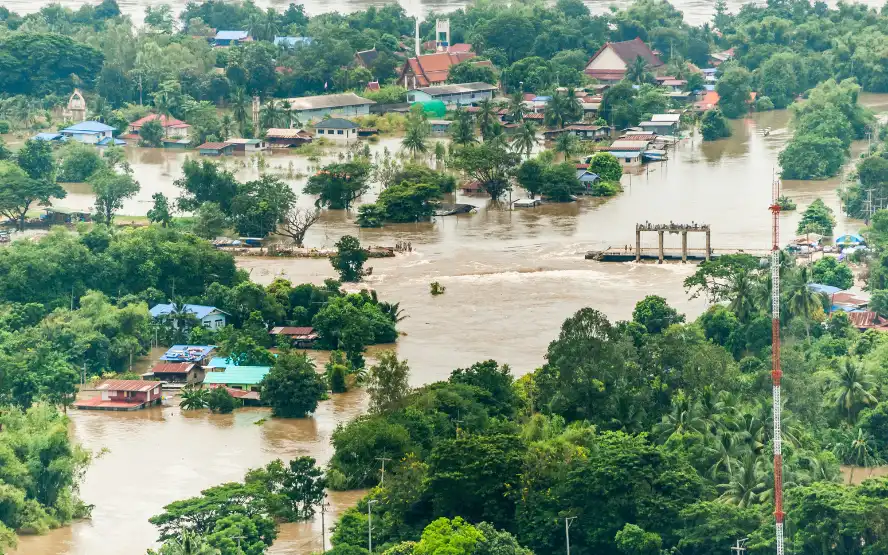
The Philippines flood control scam ghost projects scandal has real-world consequences. Communities that were promised flood protection now face devastating damage every monsoon season. With much of the budget wasted, vital areas remain unprotected against severe flooding, threatening lives and livelihoods.
Aside from environmental dangers, the scandal has also hurt the local economy. Funds that should have been directed toward job creation, infrastructure repair, and disaster response were instead siphoned off by corrupt officials. The result is a loss of billions that could have boosted public welfare and resilience.
In response, the Independent Commission for Infrastructure (ICI) has launched an extensive audit of all flood control projects across the nation. Several senators and lawmakers are under investigation for their involvement in budget manipulation and misuse of public funds.
The Anti-Money Laundering Council has also issued freeze orders on billions in suspect accounts, while the Department of Justice has placed several individuals under immigration watch to prevent them from fleeing the country. The administration has pledged to hold everyone involved accountable, from project engineers to senior politicians.
Although this issue is unfolding in the Philippines, it carries important lessons for fast-developing nations like the UAE and Gulf countries, which are also investing heavily in infrastructure and flood management.
The Philippines flood control scam ghost projects case highlights the urgent need for transparency, regular audits, and digital monitoring of large-scale public projects. The UAE’s existing focus on anti-corruption measures, e-governance, and accountability frameworks can serve as a model for developing nations seeking to avoid similar pitfalls.
Experts suggest that Gulf nations can further strengthen oversight by using AI-driven project tracking systems, public tender transparency, and community-based monitoring to ensure that every project delivers real results.
The Philippine government has vowed to implement sweeping reforms to restore public confidence. Proposals include mandatory third-party audits, greater involvement of civil society watchdogs, and stricter penalties for officials caught manipulating public works funds.
However, many citizens remain skeptical. For true reform to occur, both systemic corruption and political interference must be eliminated. Transparency in government spending, timely publication of project data, and open-access auditing are key to rebuilding credibility.
The exposure of Philippines flood control scam ghost projects has laid bare the systemic corruption undermining infrastructure development in the country. Beyond the financial losses, it represents a breach of public trust and a direct threat to climate resilience.
As the investigation widens, the case serves as a powerful reminder—both in the Philippines and globally—that infrastructure is only as strong as the integrity behind it. For Gulf nations, this stands as a warning and an opportunity to reinforce transparency before corruption ever takes root.
Keep in touch with our news & offers
Thank you for subscribing to the newsletter.
Oops. Something went wrong. Please try again later.
Thank you for subscribing to the newsletter.
Oops. Something went wrong. Please try again later.


