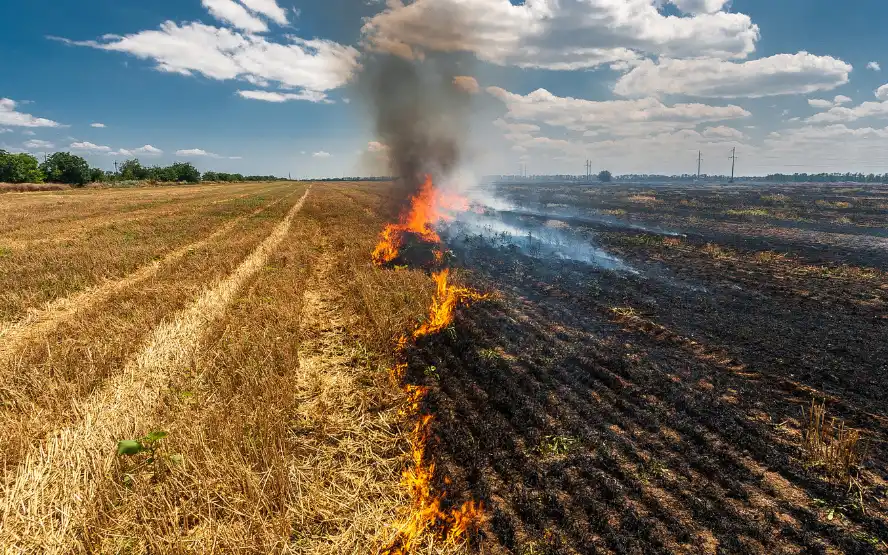
Stubble burning across Punjab and Haryana has reportedly dropped by 77 percent following recent seasonal floods, according to local government data. The floods, which disrupted crop and residue-burning patterns, appear to have had an unexpected environmental benefit, reducing the number of field fires that contribute to air pollution in the region.
Authorities say that the anomalously heavy rainfall and waterlogging prevented many farmers from burning rice stubble at the usual times. Satellite monitoring shows a significant decline in smoke plumes during what is normally a peak burning period. Local environmental agencies are now exploring whether similar trends could be sustained through better crop residue management and flood-resilient agricultural infrastructure.
Experts caution that while the reduction is substantial, long-term air quality improvements will depend not only on fewer fires, but also on wind patterns, atmospheric conditions, and enforcement of regulations. Still, many in both states are optimistic that this unexpected side-effect of the floods could inform policy to curb stubble burning permanently.