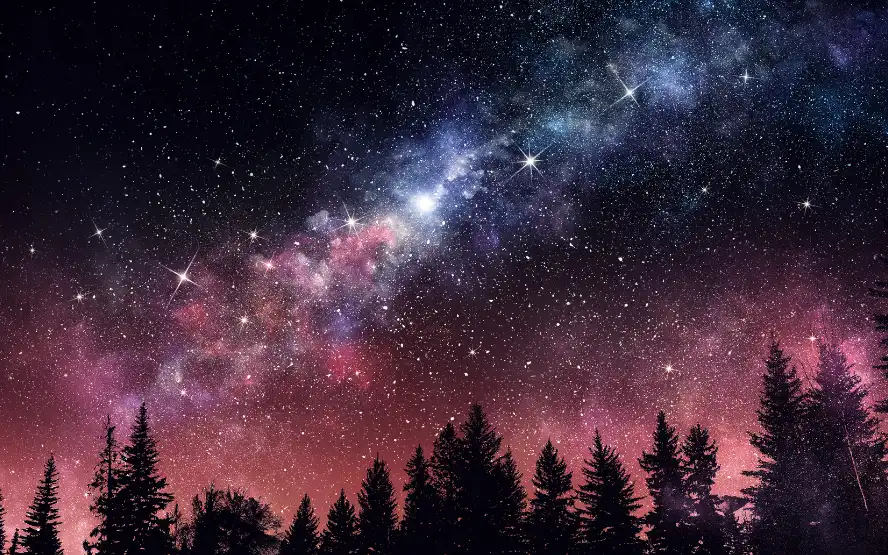
Before the rise of artificial lighting, the Milky Way was a familiar presence in night skies across the world. But today, with light pollution obscuring the heavens over most major cities, only a few remote places still allow people to witness the cosmos in its unfiltered brilliance.
Astrophysicist and documentary photographer Jordi Busqué has dedicated his life to finding and preserving those places. In his latest photographic collection, Busqué showcases 11 breathtaking images of the night sky that bridge the gap between science and art — capturing a universe that many have forgotten exists.
Busqué’s fascination with astronomy began in his childhood summers spent in Peñarroyas, a small village in Teruel, Spain, with only four permanent residents. “The night skies there were unbelievable,” he recalls. “There were so many stars that I couldn’t even make out the main constellations. It felt as impressive as going to space.”
That early wonder evolved into a lifelong pursuit. Combining his background as an astrophysicist with his passion for photography, Busqué travels the world to document the last remaining dark-sky sanctuaries — regions untouched by urban glow, where the Milky Way still dominates the horizon.
His latest collection spans locations from Morocco’s deserts to Patagonia’s windswept landscapes, each frame revealing the celestial grandeur that once enveloped humanity before the age of electricity. The images are not only scientific records but emotional testaments — urging society to value darkness as a vital natural resource.
“Being under a truly dark sky connects you with something much larger,” Busqué said in a recent interview. “You realize how small we are, and how much we’ve lost by letting the stars disappear.”
Experts estimate that more than 80% of the global population now lives under light-polluted skies. International efforts such as dark-sky reserves in Chile, Namibia, and the Canary Islands are working to protect these rare views for future generations.
Through his lens, Busqué invites the world to pause, look up, and rediscover the wonder of the cosmos — a reminder that beauty and science coexist most profoundly under the stars.