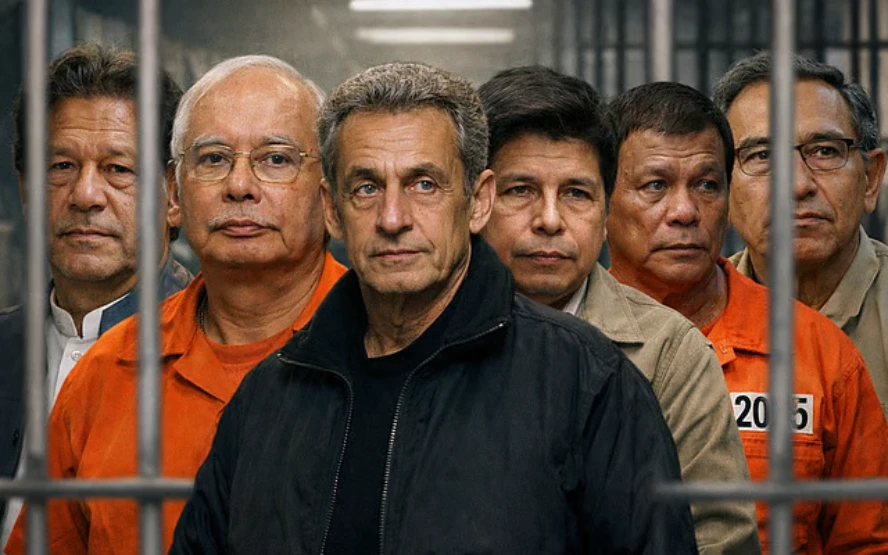
Ex-heads of state behind bars in 2025 signal a dramatic shift in global politics, as former presidents and prime ministers move from palaces and presidential suites to prison cells, detention centres and courtrooms, facing charges from corruption and money laundering to abuse of power and crimes against humanity.
Ex-heads of state behind bars in 2025: Power, accountability and reversal of fortune
Across Asia, Latin America and Europe, ex-heads of state behind bars in 2025 are testing how far accountability can reach in deeply polarised societies.
Once untouchable figures who commanded armies, rewrote constitutions and dominated national life, many now navigate appeals courts, special prisons and international tribunals. Their cases have become flashpoints at home, influencing elections, fuelling protests and putting judicial independence under the microscope.
Ex-heads of state behind bars in 2025: Pakistan’s Imran Khan (71)
Former Pakistan Prime Minister Imran Khan is among the most prominent ex-heads of state behind bars in 2025. In December 2025, a court sentenced him and his wife Bushra Bibi to 17 years in prison in a graft case over under-priced state gifts, on top of earlier convictions including a 14-year term related to land corruption.
Khan and his Pakistan Tehreek-e-Insaf (PTI) party insist the charges are politically motivated and plan further appeals into 2026, as supporters mobilise and the opposition adjusts to his continued incarceration.
Ex-heads of state behind bars in 2025: Malaysia’s Najib Razak (72)
Another high-profile member of the ex-heads of state behind bars in 2025 list is former Malaysian Prime Minister Najib Razak. On December 26, 2025, he was handed a fresh 15-year sentence and a fine of around 13.5 billion ringgit (about 3.3 billion US dollars) for abuse of power and money laundering linked to the 1MDB scandal.
This new term will begin after his existing sentence ends, and a High Court has already rejected his bid for house arrest. Najib is expected to appeal the latest ruling and challenge the massive fines in 2026, with potential implications for his influence inside UMNO and Malaysian politics.
Ex-heads of state behind bars in 2025: Peru’s cascade of convictions
Peru is a key example of how ex-heads of state behind bars in 2025 reflect systemic anti-corruption drives.
-
Martín Vizcarra (63)
The former president who once vowed to “fight corruption at any cost” was sentenced in November 2025 to 14 years in prison for accepting bribes while serving as a regional governor. He is jailed at Barbadillo Prison in Lima, fined and banned from office for nine years, with appeals continuing into 2026. -
Pedro Castillo (56)
Ousted in 2022 after attempting to dissolve Congress, Castillo received an approximately 11.5-year sentence in late 2025 for conspiracy to commit rebellion. He remains in custody in Lima, barred from public office and preparing appeals, as his case underscores Peru’s turmoil and battles over presidential overreach. -
Alejandro Toledo (79)
Once a symbol of Peru’s democratic renewal, Toledo is now among long-serving ex-heads of state behind bars in 2025, imprisoned for his role in the Odebrecht bribery scandal. Extradited from the US, he received a 20-year sentence in 2024 over the Interoceánica Sur highway contract and an additional 13 years and 4 months in the Ecoteva money-laundering case in 2025. Held at Barbadillo Prison, he cites age and serious health issues in bids for leniency. -
Ollanta Humala (63)
The former president was sentenced in April 2025 to 15 years for money laundering tied to illegal campaign cash from Odebrecht and Venezuelan-linked funds. Taken into custody immediately, he likely remains at Barbadillo while his legal team pursues appeals, making him another Peruvian ex-leader behind bars.
Ex-heads of state behind bars in 2025: Duterte at the ICC and Sarkozy under supervision
Ex-heads of state behind bars in 2025 also include leaders facing international justice or tightly controlled liberty.
-
Rodrigo Duterte (80), Philippines
Arrested in March 2025 under an International Criminal Court (ICC) warrant, Duterte is detained in The Hague over alleged crimes against humanity linked to his deadly “war on drugs”. In 2026, the ICC is expected to move through pre-trial hearings and towards a potential full trial. Interim release is considered unlikely, meaning he is expected to remain in custody throughout 2026. -
Nicolas Sarkozy (70), France
The former French president began serving a five-year sentence in October 2025 at Paris’ La Santé Prison for criminal conspiracy tied to alleged Libyan funding of his 2007 campaign, making him the first ex-leader of an EU state jailed. After about three weeks, an appeals court granted his release under strict judicial control: he cannot leave France or contact justice ministry officials.
Now preparing an appeal expected in spring 2026 and writing “A Prisoner’s Diary” about his experience, Sarkozy remains a central figure in debates on how far France will go in prosecuting former heads of state.
Ex-heads of state behind bars in 2025: South Korea’s Yoon Suk Yeol (65)
South Korea’s former president Yoon Suk Yeol is another prominent case among ex-heads of state behind bars in 2025. Arrested on January 15, 2025, he faces multiple charges related to a failed attempt to impose martial law in December 2024, as well as alleged violations of political fundraising laws tied to opinion polls involving him and his wife Kim Keon-hee.
Prosecutors have requested a 10-year sentence on counts including obstruction of justice, abuse of power, falsifying records and hindering his own arrest. Detained pending trial, he awaits a key Seoul Central District Court verdict expected in early 2026, while denying all allegations.
Ex-heads of state behind bars in 2025: What to watch in 2026
The story of ex-heads of state behind bars in 2025 is far from over. Appeals, retrials and international proceedings in 2026 could reshape both the futures of these leaders and the political trajectories of their countries.
Key milestones to watch include Sarkozy’s spring appeal, Duterte’s evolving ICC process, and verdicts or sentencing phases in cases like Yoon Suk Yeol’s. New investigations or arrests could add more names to this list, as courts continue to test how accountability applies to those who once occupied the highest offices.
Gulf Repost examines global political shifts like ex-heads of state behind bars in 2025, connecting headline-grabbing trials and sentences to broader debates on justice, power and democracy.
With concise explainers and context-rich features, Gulf Repost helps readers in the UAE and wider region understand how high-profile prosecutions abroad can influence governance standards, legal norms and public expectations at home.