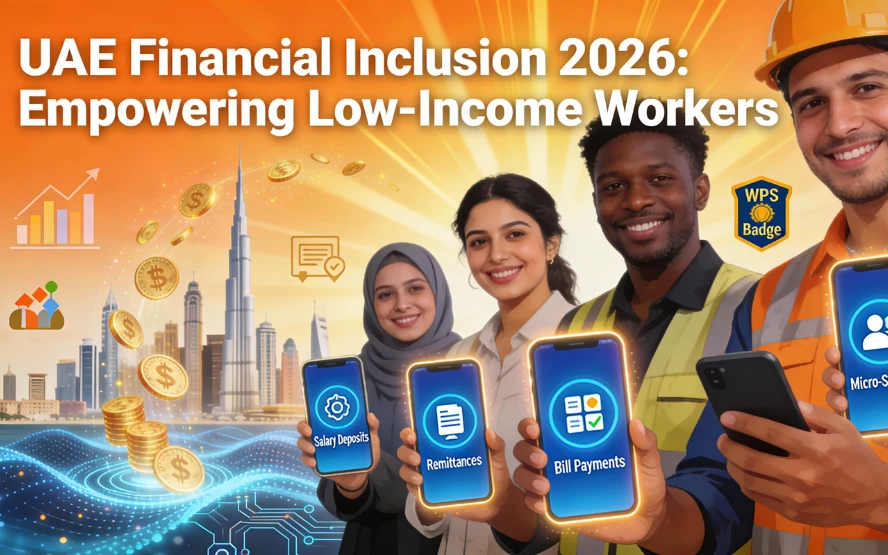
UAE financial inclusion 2026 brings practical change for over 60% of workers earning below Dh5,000/month, as digital salaries evolve from payments into usable tools for remittances, bills and savings. Cash dependency drops 15 points to 69%, payroll apps become daily utilities, and workplace literacy bridges gaps amid WPS near-universal coverage.
From digital pay to digital lives
Workers now withdraw less cash (45% within 24 hours) and use online transfers more, marking the first multi-year shift from “digital salary, cash life.” Edenred’s 2025 data shows salary apps handling groceries, rent and family remittances, boosting employer satisfaction by 25% via integrated ecosystems.
Literacy and compliance drive stability
With 31% basic financial literacy, employers partner with fintechs for multilingual workshops on payslips and budgeting, cutting disputes and turnover in construction/logistics. MOHRE‘s 5,400 violations (285k inspections H1 2025) underscore WPS transparency needs.
HSBC/YouGov: 25% uncertain about finances, 34% confident for post-UAE life—multi-country complexity top hurdle (28%).
AI and human touch ahead
2026 sees AI flagging fraud/stress early, but trust via clear, local-language guidance wins. Inclusion shifts to habits/confidence, stabilising mobile workforces.
Gulf Repost unpacks UAE workforce trends, from WPS evolution to financial literacy and inclusion strategies. Track how digital tools reshape low-income lives, compliance and economic stability.